Window tint is one of the least expensive things you can do to a vehicle and one of the few you notice every single day. It is also the upgrade most people buy for the wrong reason. Tint is not really about how dark the glass looks from the curb. It is about heat, ultraviolet light, glare, and what a decade of sun does to the inside of a car.
Here is what film actually does, why a quality ceramic tint and a cheap dyed tint are two different products, exactly what Ontario law allows on each window, and how the job should be done.
Heat: the part you feel first
The energy coming through your glass is mostly invisible. Sunlight arrives as roughly 3 percent ultraviolet, about 44 percent visible light and about 53 percent infrared. Infrared is the part you feel as heat on your forearm at a red light, and your eyes cannot see any of it.
That single fact explains why dark glass and cool glass are not the same thing. A cheap dyed film blocks visible light, which makes the car look shaded, while letting most of the infrared straight through. A quality ceramic film is engineered to reject infrared at almost any shade, which is why a light ceramic tint can keep a cabin cooler than a limo dark dyed film.
Do not shop for tint by shade. Ask for the total solar energy rejected number. It is the only figure that tells you how much heat the film actually stops.
What that means in practice, on a July afternoon in a parking lot off Wellington Road:
- Lower peak cabin temperature when the car has been sitting closed in the sun.
- The air conditioning gets ahead sooner, because it is fighting less radiant heat coming through the glass while you drive.
- Surfaces you touch stay usable. Steering wheel, seat belt buckles and a black leather seat all get their heat from infrared landing directly on them.
- Less strain on an EV or hybrid. Climate control is a meaningful draw on the battery, and anything that reduces the cooling load shows up in range on a hot day.
UV: the damage you do not notice until it is done
Quality automotive film blocks roughly 99 percent of ultraviolet light. This matters more than most drivers assume, for two separate reasons.
Your side glass is not doing this job already. A windshield is laminated safety glass, with a plastic interlayer that already stops most UV. The side and rear windows are tempered glass, and tempered glass lets a significant amount of UVA through. That is the wavelength associated with skin ageing and long term skin damage, and it is why drivers who spend years commuting tend to show more sun damage on their left arm and the left side of the face. If you run the 401 or the 402 daily, or you drive for a living, that exposure adds up.
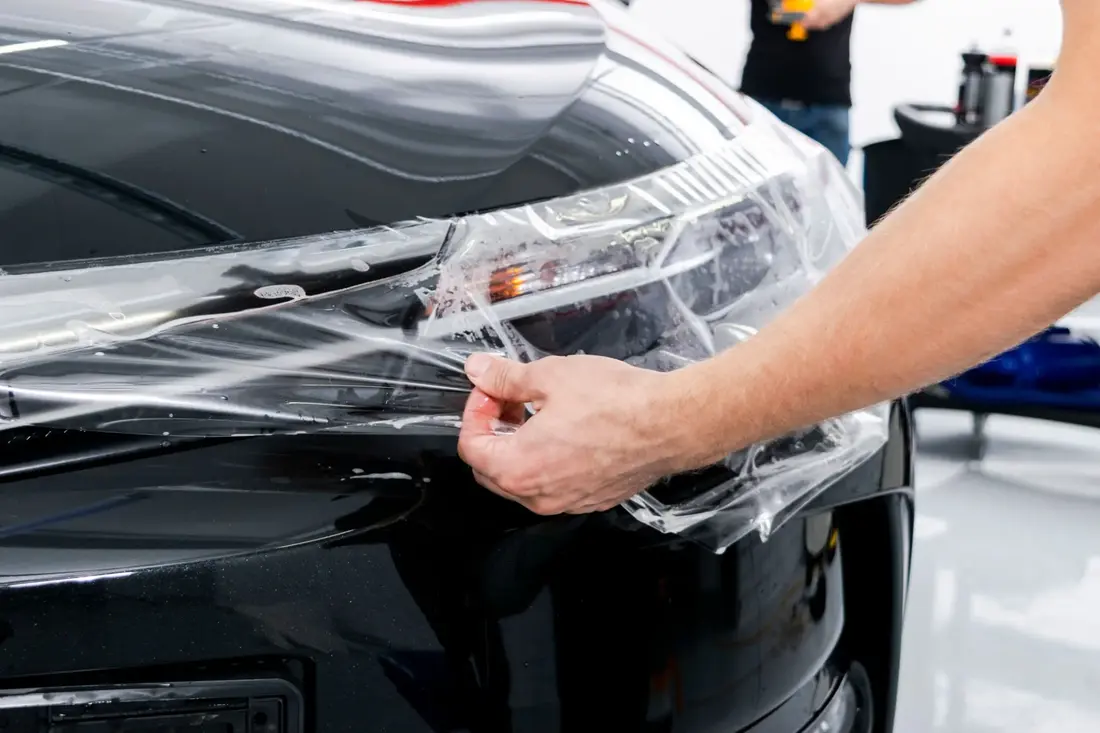
Your interior is being bleached and cooked at the same time. UV and infrared together are what fade a dashboard, chalk the plastics on a door card, crack a leather seat and turn a black headliner grey. Cabin trim is expensive and often difficult to source once a vehicle is a few years old. Film is the cheapest way to slow all of it down, and it does the same job for the car as paint protection film does for the exterior.
Glare, night driving and the low winter sun
Glare is a comfort issue until it becomes a safety one. Southwestern Ontario has two versions of it, and they arrive in opposite seasons.
- Summer glare off wet pavement after an afternoon storm, and off the back window of the car in front of you in stopped traffic.
- Winter glare, which is worse. The sun sits low from about 3:30pm onward, straight down an east to west road like Commissioners or Oxford, and it reflects off fresh snow and off the salt haze on your own glass.
Film cuts visible light before it reaches your eyes, which reduces squinting, eye fatigue on a long drive, and the moment where you lose the shape of a cyclist against a bright background. It also softens oncoming headlights at night, which is a real benefit now that most new vehicles run LED lighting.
There is a limit worth being honest about. Very dark film on the front doors makes shoulder checks and reversing harder after dark, particularly for older drivers. This is one of the reasons we do not push customers past the legal shade on the front windows even when they ask.
Privacy, security and what happens in a break-in
Tinted rear glass keeps whatever is on your back seat out of casual view. Most vehicle break-ins in a mall or arena lot are opportunistic, and a bag that cannot be seen from three metres away is a bag nobody bothers with.
There is a secondary effect on the glass itself. Tempered side glass is designed to shatter into small pieces on impact. Film is a plastic layer bonded to the inside of that glass, so a broken window tends to hold together in a sheet rather than collapsing into the cabin. It is not security film and it is not glass protection, but it slows down a smash and grab and it keeps fragments off your seats and out of your passengers.
What tint does in a London winter
The most common objection we hear in the shop is that tint is a summer product and a liability once the snow arrives. That is not how it works out.
- Glare control matters more in winter, not less. Low sun plus snow cover is the harshest light of the year on these roads.
- Film reduces radiant heat loss. Glass is the weakest thermal point in a vehicle. Quality film reflects some of the heat your climate control is producing back into the cabin, so the car holds warmth a little better on a cold morning.
- It does not cause frost or fog. Interior condensation comes from moisture in the cabin, usually wet floor mats and snow on boots. Film has no bearing on it.
- It does not harm your rear defroster. Rear glass is heat shrunk and installed over the defroster grid, and a proper installer works around those lines without lifting or scoring them.
Winter is also the quietest time to book a tint appointment, which is worth knowing if you would rather not wait behind the first warm week of spring.
Dyed, carbon, metallic and ceramic
Four families of film, and the price differences track real performance differences:
- Dyed film. The cheapest option. A dye layer absorbs visible light. Very little infrared rejection, and the dye breaks down under UV, which is why old cheap tint goes purple and starts bubbling. Fine on a car you are selling next year, poor value on one you are keeping.
- Carbon film. Carbon particles instead of dye. It will not fade or turn purple, gives a flat black appearance, delivers respectable heat rejection and contains no metal. A sensible middle option.
- Metallic film. Good heat rejection through reflection, but the metal layer can interfere with GPS, cell signal, satellite radio, keyless entry and tire pressure sensors, and it can look slightly mirrored. Ontario also prohibits high reflectivity film, so this is rarely the right answer here.
- Ceramic film. Non conductive ceramic particles that reject infrared without blocking signal and without reflection. The best heat rejection available at a legal shade, no colour change over time, and normally sold with a lifetime warranty. It is the film most of our customers end up choosing once they understand what they are paying for.
If you want the full breakdown of the packages we install and what each one costs, that lives on our window tinting page.
Ontario window tint law, plainly
Ontario does not publish a single legal percentage the way many American states do. The Highway Traffic Act, sections 73 and 74, is written as a visibility standard instead. Here is what that means window by window:
- Windshield. No coating that substantially obscures the interior. A narrow strip along the top edge is the accepted practice, and nothing across the driver view.
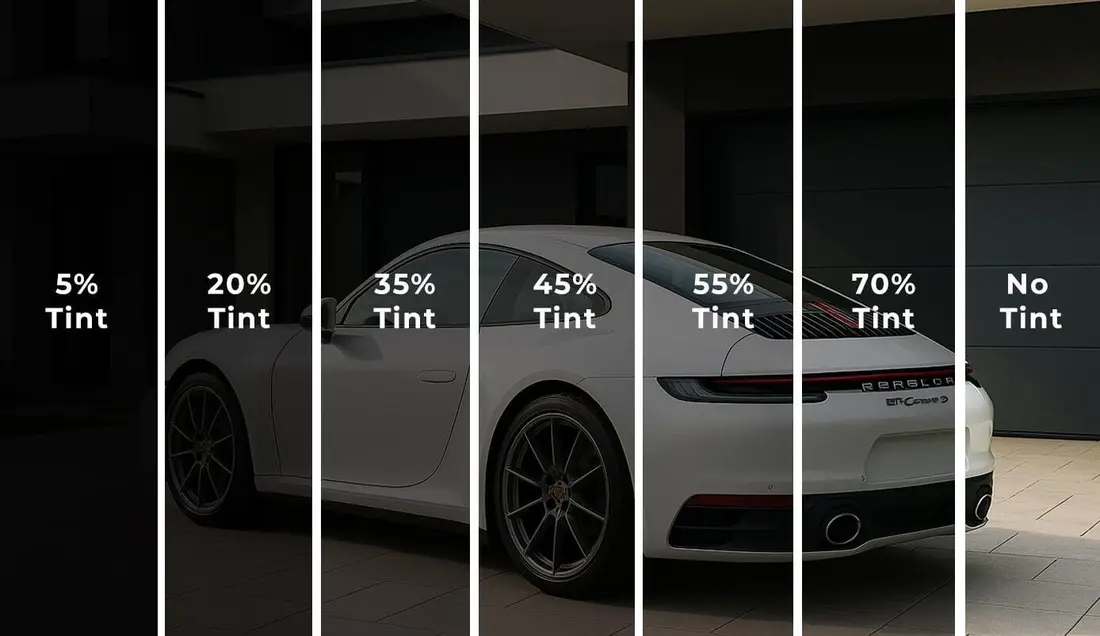
- Front side windows. No coating that substantially obscures the interior of the vehicle when viewed from outside. Because there is no stated number, roughly 70 percent visible light transmission is treated as the safe ceiling by shops across the province.
- Rear side windows and rear window. Any darkness is permitted, provided the vehicle has both exterior side mirrors, which every modern vehicle does.
- Reflectivity. Mirrored and high reflectivity films are not permitted on any window.
- Medical exemptions. Ontario does not issue them, and no certificate or sticker is required for legal film.
Because the front window standard is a judgement call rather than a measured number, enforcement varies. Fines generally fall in the range of about 85 to 500 dollars, and an officer can require you to remove the film. Rules do get amended, so confirm current requirements before you commit to anything unusual, and treat the numbers above as the practical guidance we work to rather than legal advice.
Our standard approach is dark rear glass for privacy and heat, and a legal ceramic film on the front doors that buys you most of the heat and UV performance without the ticket. If you want the vehicle to look uniform front to back, we will tell you honestly where that crosses the line.
What a proper install looks like
Tint is almost entirely a labour product. The same roll of film in two different hands produces two very different results, and the failures are always the same: lifted edges, a gap at the top of the door glass, dust trapped under the film, and creases on curved rear windows.
What to expect from a shop doing it properly:
- A clean, enclosed bay. Tint installed outdoors or in a dusty shop traps contamination permanently under the film.
- Computer cut patterns for your exact year, make and model, so nothing is trimmed with a blade against your glass or your door seals.
- Heat shrinking on the rear glass, so a flat sheet of film conforms to a compound curve without fingers or creases.
- Edge to edge coverage with the door glass dropped, so there is no untinted band when the window is fully up.
- Old film removed properly. Failing tint has to come off along with its adhesive, and on rear glass that means working around defroster lines without damaging them.
After the install, leave the windows up for three to five days and longer in cold weather. Some haze and a few small water pockets are normal while the adhesive cures, and they clear on their own. Wait about a month before cleaning the inside of the glass, then use a soft cloth and an ammonia free cleaner.
Booking window tinting in London
Southwest Wheels and Custom installs automotive window film at Unit 1, 647 Wilton Grove Road in London, Ontario, serving drivers in London, St. Thomas, Strathroy, Dorchester, Ingersoll, Woodstock, Komoka and Mount Brydges. We carry carbon and ceramic film, cut to your vehicle, installed to legal limits and backed by a lifetime warranty against bubbling, peeling and colour change.
Plenty of customers pair tint with paint protection film on the front end, or book it alongside a wheel and tire package while the vehicle is with us. Tell us your year, make and model and what you want out of the glass. Send us your vehicle details or call the shop.
Frequently asked questions about window tinting
Is window tinting legal in Ontario?
Yes, within limits. The Highway Traffic Act does not set a single percentage for cars. It prohibits any coating on the windshield or front side windows that substantially obscures the interior of the vehicle when viewed from outside. Rear side windows and the rear window can be any darkness provided the vehicle has both exterior side mirrors. Mirrored or high reflectivity film is not permitted on any window.
How dark can I tint my front windows in Ontario?
Because the law is written as a visibility standard rather than a percentage, most shops in Ontario treat roughly 70 percent visible light transmission as the safe ceiling for front side windows. A light ceramic film at that level still rejects a large amount of heat and UV. Anything materially darker on the front doors is at the discretion of the officer who stops you, and fines generally run from about 85 to 500 dollars.
Does window tint actually make a car cooler?
A good film does, but darkness is not what does it. Roughly half the energy in sunlight is infrared, which you feel as heat and cannot see. Ceramic films are engineered to reject infrared specifically, so a light ceramic tint can reject more total solar energy than a much darker dyed film. Ask for the total solar energy rejected figure rather than only the shade.
Is ceramic tint worth the extra cost?
For a vehicle you plan to keep, usually yes. Ceramic film gives noticeably better heat rejection at a legal shade, will not turn purple or bubble, and contains no metal, so it does not interfere with GPS, cell signal, satellite radio or tire pressure sensors. Dyed film is cheaper up front and typically needs replacing years sooner.
Does window tint help in the winter?
Yes, in two ways that matter in southwestern Ontario. Low winter sun sits directly in your eyes in the late afternoon and reflects hard off snow, and film cuts that glare considerably. Quality film also reduces radiant heat loss through the glass, so the cabin holds warmth a little better on cold mornings. It will not stop your windows from frosting and it does not replace a working defroster.
How long does window tint last?
Cheap dyed film often starts fading or turning purple in three to five years and can bubble sooner in a vehicle parked outside. Quality carbon and ceramic films are normally sold with a lifetime warranty against bubbling, peeling, cracking and colour change, and routinely outlast the ownership of the vehicle.
Can you tint over factory privacy glass?
Yes. Factory privacy glass on SUVs and trucks is dyed glass, not film, and it blocks very little heat or UV. Adding a ceramic film over it gives you the heat and UV performance the tinted look implies, and it lets us match the front windows to the rear so the vehicle looks consistent.
How soon can I roll my windows down after tinting?
Leave them up for three to five days, and longer in cold weather. A small amount of haze or a few water pockets is normal while the adhesive cures and clears on its own. Wait about a month before cleaning the inside of the glass, then use a soft cloth and an ammonia free cleaner.
Book your window tint
Tell us your year, make and model and whether you want maximum heat rejection, privacy or both. We will quote carbon and ceramic options and get you on the schedule.
Get a Window Tint Quote