Most flats we see in the shop start with a screw. Somebody drives past a new build, picks one up in the tread, and finds the tire soft a few days later. A hole like that can usually be fixed, and a proper repair should last as long as the rest of the tire. The catch is the word proper. A lot of the repairs we take apart were done from the outside in ten minutes, and those don't count.
Below is how a puncture should be fixed, what makes a tire impossible to repair, and what to do between the moment the light comes on and the moment you get to a shop.
The short answer
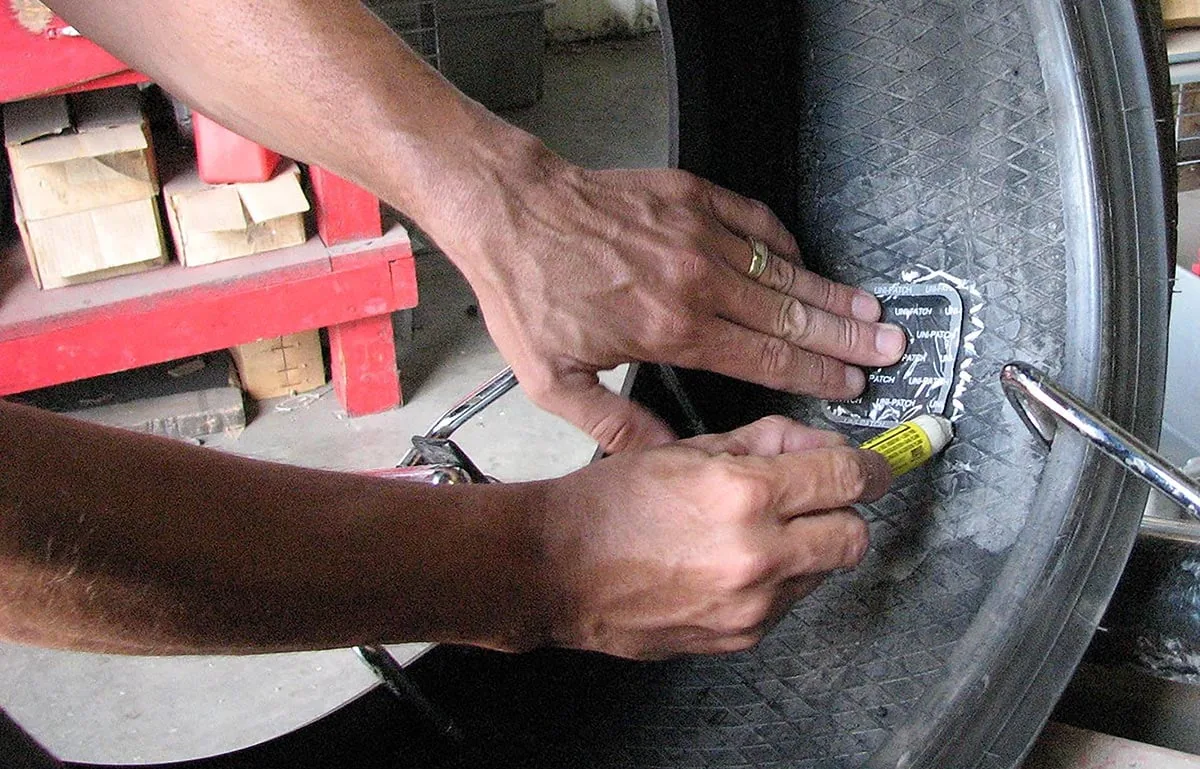
The best way to fix a hole in a tire is a plug-patch, installed from the inside. The tire comes off the wheel, a technician checks the inner liner for damage, cleans out the injury, and installs a single unit that fills the hole with a rubber stem and seals the inside with a patch. That's the method the U.S. Tire Manufacturers Association sets out for passenger and light truck tires, and it's what the major tire makers build their repair policies around.
It only works on the right kind of damage. The puncture has to be in the tread, it can't be wider than 6 mm (1/4 inch), and the tire can't have been driven on while flat.
If the tire never comes off the wheel, nobody has looked inside it. That's the real problem with a plug pushed in from the outside.
Plug, patch or both?
There are three ways people fix a puncture, and only one of them holds up.
A plug on its own
A plug is a sticky rubber strip pushed into the hole from outside, usually without taking the tire off the car. It's quick and it often stops the leak. The USTMA is blunt about it: a plug alone is an unacceptable repair. It doesn't seal the inner liner, so air can still work its way into the body of the tire, and because the tire stays on the wheel, nobody checks whether the nail did more damage on the way in.
A patch on its own
A patch is glued to the inside of the tire over the hole. It seals the liner, but it leaves the channel through the tread open. Water and road salt get into that channel and reach the steel belts. Give it a couple of Ontario winters and you can end up with rust inside the tire and, eventually, a belt separation.
A plug-patch
A plug-patch does both jobs in one piece. The stem fills the channel so nothing gets in from the road side, and the patch seals the liner so air can't get out from the inside. It's the repair we do, and it's the one the tire makers recognize.
When a tire can be repaired
Before anyone talks about how to fix a tire, they should check whether it can be fixed at all. Here's what we look at:
- Where the hole is. Repairs are only allowed in the tread. If the damage is in the shoulder or the sidewall, the tire is done. Those areas flex every time the wheel turns, and no repair stays put there.
- How big it is. Anything wider than 6 mm (1/4 inch) can't be repaired. Most screws and nails are well under that. A gash from a piece of scrap metal usually isn't.
- What it looks like inside. Once the tire is off the wheel we check the inner liner. A worn line around the inside of the sidewall, or loose rubber dust inside the tire, means it was driven while too low. That tire gets replaced, even if the hole itself is tiny.
- Older repairs. A new repair can't overlap an old one, and a tire that already has an improper repair in it has to come out of service.
- Tread left. If the tire is close to worn out, paying for a repair rarely makes sense. We'll tell you if that's where you are.
If any of these rules a repair out, we'll show you the damage before we talk about a replacement.
Why driving on it flat changes everything
A tire with no air in it isn't holding the car up anymore. The sidewalls fold under the weight and grind against themselves, and the heat builds fast. A couple of kilometres at highway speed can wreck the inside of a tire that only had a small nail in it.
From the outside it might look fine. Inside, the liner is often chewed up, and no repair covers that. If your tire pressure light comes on and the car starts pulling or feels heavy, slow down and get off the road somewhere safe. A tire you stopped on early is usually repairable. A tire you drove home on usually isn't.
What to do when you get a flat
Here's the order we'd go in:
- Get somewhere safe. A parking lot beats the shoulder of the 401 every time. Put your hazards on.
- Leave the nail or screw where it is. Pulling it out turns a slow leak into a fast one.
- Top it up if it's holding. If the tire still holds some air and you're close by, inflate it to the pressure on your door jamb sticker and drive gently to a shop. Check it again after a few minutes.
- Put the spare on if it isn't. Temporary spares have their own pressure and speed limits printed on the sidewall, and most are only meant to get you a short distance.
- Use a kit as a stopgap. A sealant can or a plug kit can get you moving again. Treat it as temporary and get the tire looked at within a day or two.
Plug kits and tire sealant
We don't mind a plug kit in the trunk. It's a reasonable way to get off the side of the road. The trouble starts when the roadside plug becomes the permanent repair. Nobody has checked the tire from the inside, and the plug went in while the tire was carrying the weight of the car.
Canned sealant works the same way. It can seal a small hole long enough to get you somewhere, but it coats the inside of the tire and can gum up the tire pressure sensor. If you've used sealant, tell whoever repairs the tire so they can clean it out and check the sensor.
Either way, the tire still needs to come off the wheel for a proper plug-patch. If the plug went in carefully and the tire wasn't driven low, there's a good chance it can still be saved.
Repairs, speed ratings and warranties
Every tire maker has its own policy on repairs, and they don't all agree. Going by Tire Rack's summary of manufacturer policies:
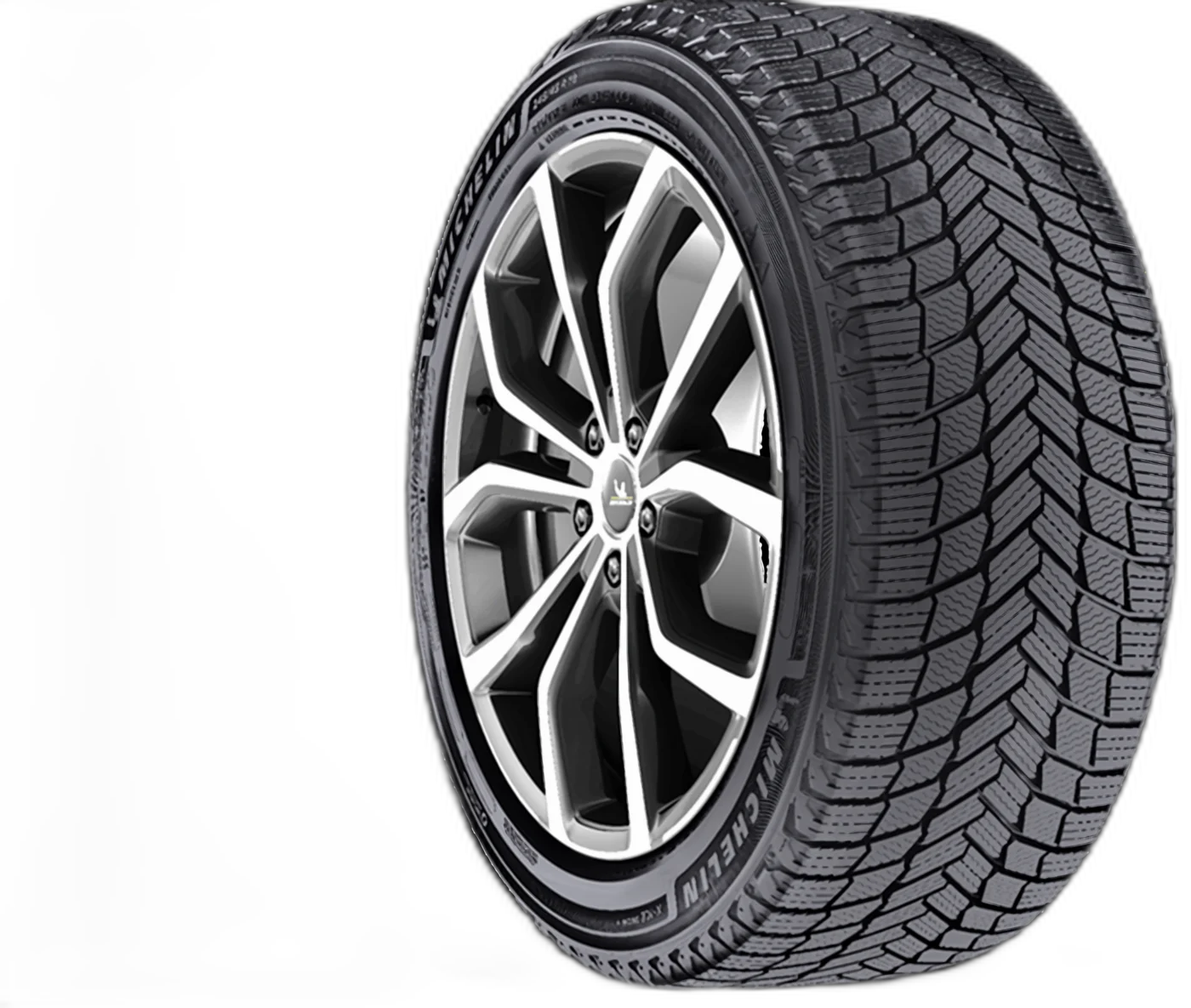
- Michelin keeps the speed rating on a properly repaired tire and allows up to three repairs, at least 90 degrees apart.
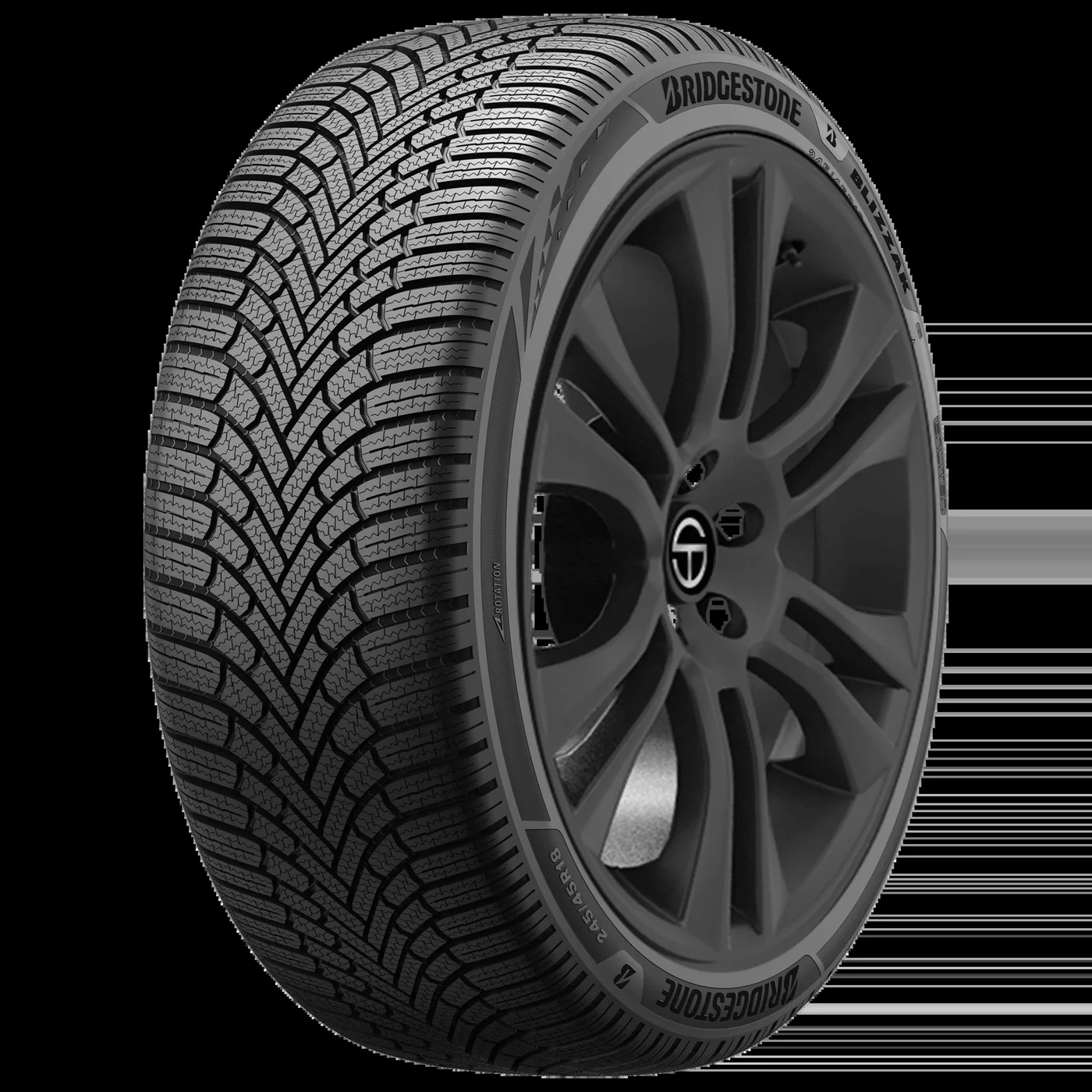
- Bridgestone voids the speed rating after a repair and allows two repairs at least 16 inches apart.
- Goodyear allows one repair if you want to keep an H speed rating or higher.
- Pirelli doesn't endorse repairs on V-rated and faster tires.
- Continental keeps the speed rating but says a repair voids its materials, workmanship and tread wear warranties.
For a daily driver on all-seasons this rarely changes much. For a performance car on summer tires, it can decide whether a repair is worth doing. We check the brand's policy before we start.
What about run-flat tires?
Run-flats are built to carry the car for a limited distance with no air in them, which also means you might not feel a puncture at all. The tire pressure light is often the only warning you get.
Repair policies vary even more here. Some makers allow one repair if the tire wasn't driven at very low pressure. Bridgestone and Firestone, for example, only allow it if the tire kept at least 15 psi. Pirelli and Continental don't recommend repairing their run-flats, and Yokohama says its run-flats shouldn't be repaired at all. If you've been driving on a run-flat with no air in it, plan on replacing it.
Flats around London
Most of the punctures we see have a local story behind them. There's a lot of building going on in the south end, and construction screws end up in tread. Spring brings potholes, which are more likely to cut a sidewall or bend a rim than leave a neat hole. Cold snaps drop the pressure in every tire on the road, so a slow leak that went unnoticed all summer suddenly turns the light on in November.
If the light comes on during the first cold morning of the season, check all four tires before you assume you have a puncture. A tire loses roughly 1 psi for every 5 or 6 degrees Celsius the temperature falls.
Getting a flat repaired at our shop
When you bring a flat to Southwest Wheels and Custom, the tire comes off the wheel every time. We find the puncture, check the inside of the tire, and tell you whether it can be repaired before we do anything else. If it can, we install a plug-patch, remount, balance and check the tire pressure sensor. If it can't, we'll show you why and price a replacement that matches the other three.
We're at Unit 1, 647 Wilton Grove Road in London, Ontario, just off the 401, and we see drivers from St. Thomas, Strathroy, Dorchester, Ingersoll, Woodstock and the rest of the area. If the damage turns out to be a bent rim rather than a hole, we handle wheels too. Send us your vehicle details, call ahead, or browse tires if yours can't be saved.
Frequently asked questions about flat tire repair
Is a tire plug a permanent fix?
No. A plug on its own is a temporary repair. It doesn't seal the inside of the tire, and nobody has checked the tire for internal damage. Have it replaced with a proper plug-patch from the inside as soon as you can.
Can a nail in the sidewall be repaired?
No. Sidewall and shoulder damage can't be repaired safely because those areas flex constantly. The tire has to be replaced.
How big a hole can be repaired?
Up to 6 mm (1/4 inch) across, and only in the tread area. Bigger holes, cuts and tears mean a new tire.
How long does a proper tire repair last?
A plug-patch done to industry procedure is meant to last the rest of the tire's life, as long as the tire wasn't damaged by being driven flat.
Can a tire be repaired more than once?
Sometimes. Repairs can't overlap, and each manufacturer sets its own limit. Michelin allows up to three, Bridgestone two, and some performance tires only one.
Will a repair void my tire warranty or speed rating?
It depends on the brand. Some keep the speed rating after a proper repair, others void it, and some limit warranty coverage. We check the manufacturer's policy for your tire before we repair it.
Should I pull the nail out of my tire?
No. Leave it in until you get to a shop. It's often plugging the hole well enough to slow the leak.
How long does a flat repair take?
Longer than a roadside plug, because the tire comes off the wheel and gets inspected inside. Call ahead and we'll tell you when we can fit you in.
Got a screw in your tire?
Don't drive on it low. Bring it in and we'll tell you straight whether it can be repaired.